
The Cygnus spacecraft docked with the International Space Station on Monday with fresh supplies, cargo, and experiments for astronauts living in zero-gravity. The docking was confirmed by Nasa as the Canada Arm, onboard the flying laboratory, captured the SS Piers Sellers Cygnus spacecraft.
“Your shipment of science, supplies, and snacks has arrived!” Nasa tweeted as the Northrop Grumman’s cargo resupply mission docked with the station with a unique experiment to demonstrate growing plants in zero-gravity without soil. The spacecraft had earlier launched atop an Antares rocket at the Wallops Flight Facility in Virginia.
Order Delivered
The NG17 resupply mission carries experiments focused on skin aging and tumor cells, along with tests of technology for oxygen production, batteries, and growing plants. The Colgate Skin Aging experiment evaluates cellular and molecular changes in engineered human skin cells in microgravity. Nasa said that results from this experiment could show that these engineered cells may serve as a model to rapidly assess products aimed at protecting skin from the aging process back on Earth.
MicroQuin 3D Tumor experiment arriving on the station will examine the effects of a drug on breast and prostate cancer cells in space. Scientists have said that these cells can grow in a more natural three-dimensional model, which makes it easier to characterize their structure, gene expression, cell signaling, the results could provide new insight into the cell protein targeted by the drug.
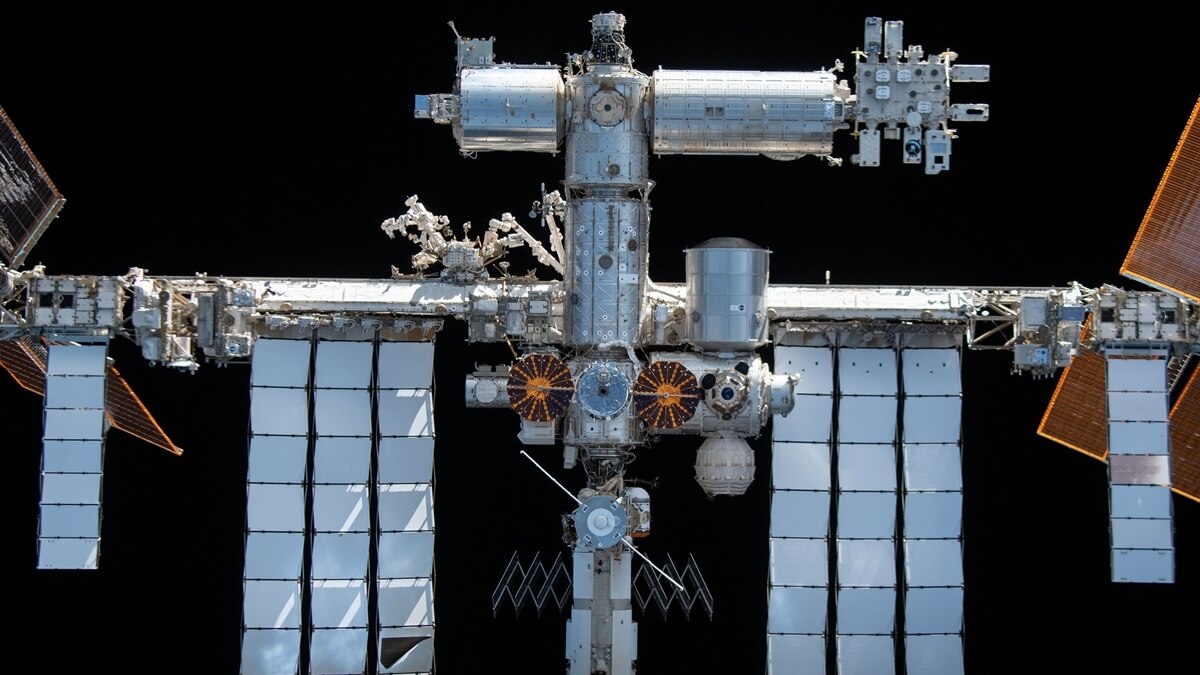
The International Space Station. (Photo: NASA)
Nasa is looking to boost its studies around farming in space as they look towards the Moon voyage and on to Mars. The latest experiment that docked with the flying laboratory is XROOTS, which tests using hydroponic (water-based) and aeroponic (air-based) techniques and the results could provide insight into the development of larger-scale systems to grow food crops for future space exploration and habitats.
Another big experiment that has been received on the station is the Solid Fuel Ignition and Extinction (SoFIE) project that will look to improve the understanding around safely using fire in zero gravity when humans reach the Moon and Mars in the coming future. The project will be conducted in the station’s Combustion Integrated Rack, which features a chamber where experiments can burn safely.
The Sofie project was initiated to mitigate the risk of fire in space travel by evaluating, testing, and selecting materials to preclude unsafe conditions related to flammability, odor, off-gassing, and fluid compatibility.
إرسال تعليق